🌍 Relocating to another country?
5 Tips to negotiate your relocation package ✈️

Relocating for work is a thrilling opportunity to advance your career, explore new horizons, and elevate your quality of life. It offers the promise of promotions, higher pay, and an enriched personal and professional experience. However, moving—whether across the country or internationally—comes with its fair share of challenges.
In today’s competitive job market, many companies are eager to attract top talent and are increasingly willing to offer relocation packages to sweeten the deal. Successfully negotiating these packages is essential, as they can reduce financial stress, provide necessary support for settling in, and pave the way for long-term success in your new role.
If you’re contemplating a move, it’s crucial to balance the exciting opportunities with the potential costs and challenges. Coach4expats will guide you through five essential tips to negotiate a relocation package that meets your needs, ensuring your next big career step starts off on the right foot.
Let’s dive in!
Tip 1: Research the Cost of Living and Local Expenses
Before negotiating your relocation package, it’s essential to understand the financial landscape of your destination. This knowledge not only helps you make informed requests but also demonstrates to your employer that you’ve done your homework. Relocating to a new city or country involves more than just moving expenses. Differences in housing prices, transportation costs, healthcare fees, and even taxes can significantly impact your finances. For instance, a higher salary might be offset by the higher cost of living in your new location. By researching these factors, you’ll be better equipped to determine the true financial implications of the move and negotiate effectively.
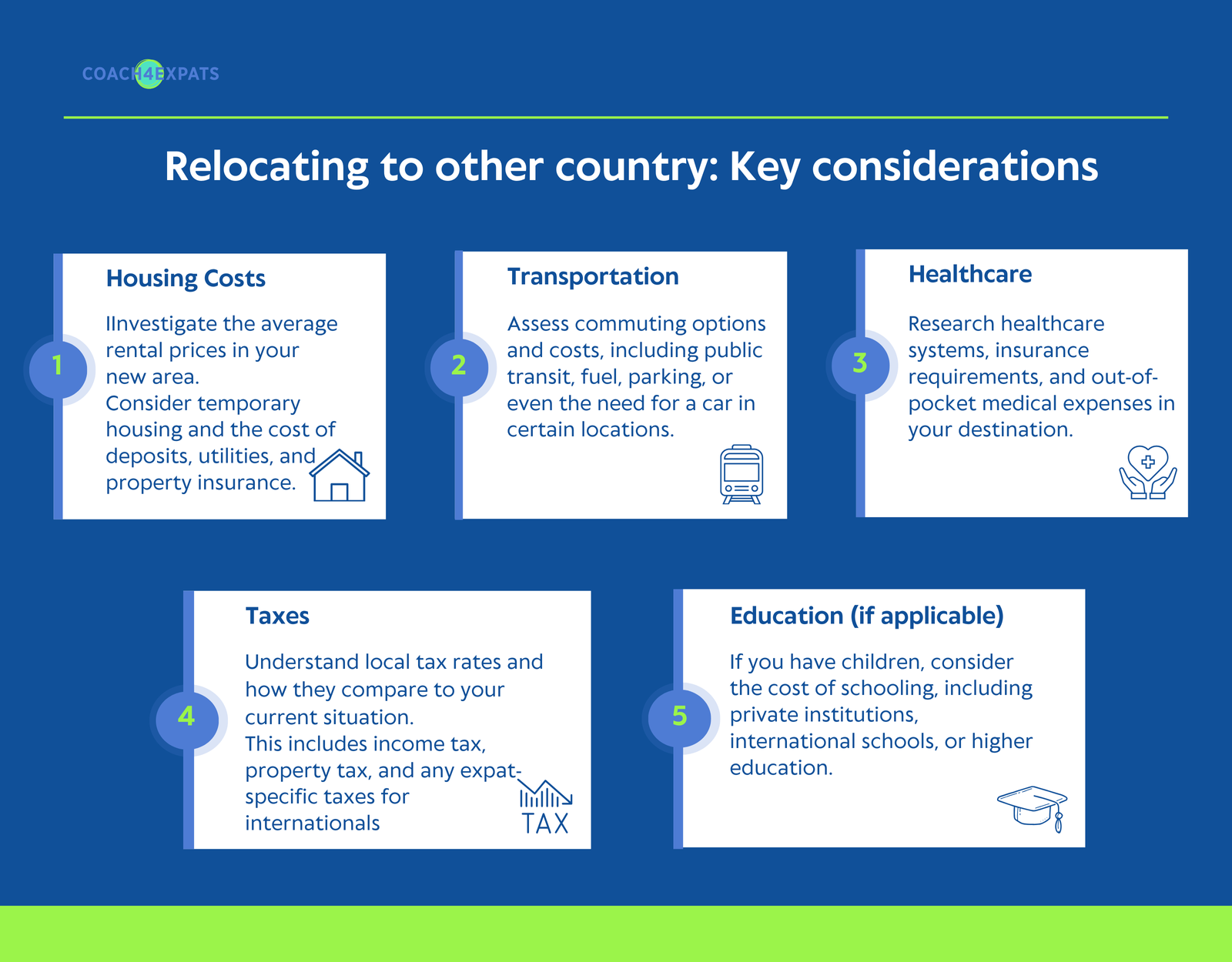
Taking the time to research your destination and its associated costs not only ensures you’re financially prepared but also gives you a clear, confident foundation for negotiation. A well-informed approach can make all the difference in securing the support you need for a smooth transition.
Tip 2: Clarify What’s Included in the Relocation Package
When considering a job relocation, it’s crucial to understand the specifics of the relocation package offered by your employer. Knowing what is covered—and what isn’t—can help you prepare for the financial and logistical aspects of your move while ensuring you’re not caught off guard. Employers often include a variety of benefits, but the details can vary widely.
Common Components of a Relocation Package
Moving Expenses: This can cover shipping household goods, flights for you and your family, and reimbursement for any related costs.
Temporary Housing: Assistance with short-term accommodations while you find a permanent home.
Travel Costs: Flights or other transportation expenses for initial relocation visits or the actual move.
Visa and Work Permit Support: Especially important for international moves, this may include covering application fees and legal services.
Adaptation Support: Language classes, cultural orientation programs, or community integration support.
Securing a clear, written breakdown of the relocation package ensures transparency and avoids misunderstandings. It also gives you a starting point to identify gaps and negotiate additional support. A written agreement provides clarity for both parties and serves as a reference point throughout the relocation process.
Tip 3: Understand Relocation Budget Options
Relocation support isn’t always limited to the initial move—it can also include resources that help you adapt to your new environment. While long-term support is typically reserved for high-level executive positions, there are still ways to optimize your relocation benefits.Many companies today are shifting from offering full relocation packages to providing a relocation budget—a flexible, lump-sum allowance that you can allocate based on your specific needs. This option allows you to prioritize expenses such as housing, family support, or integration programs, giving you greater control over how the funds are used.
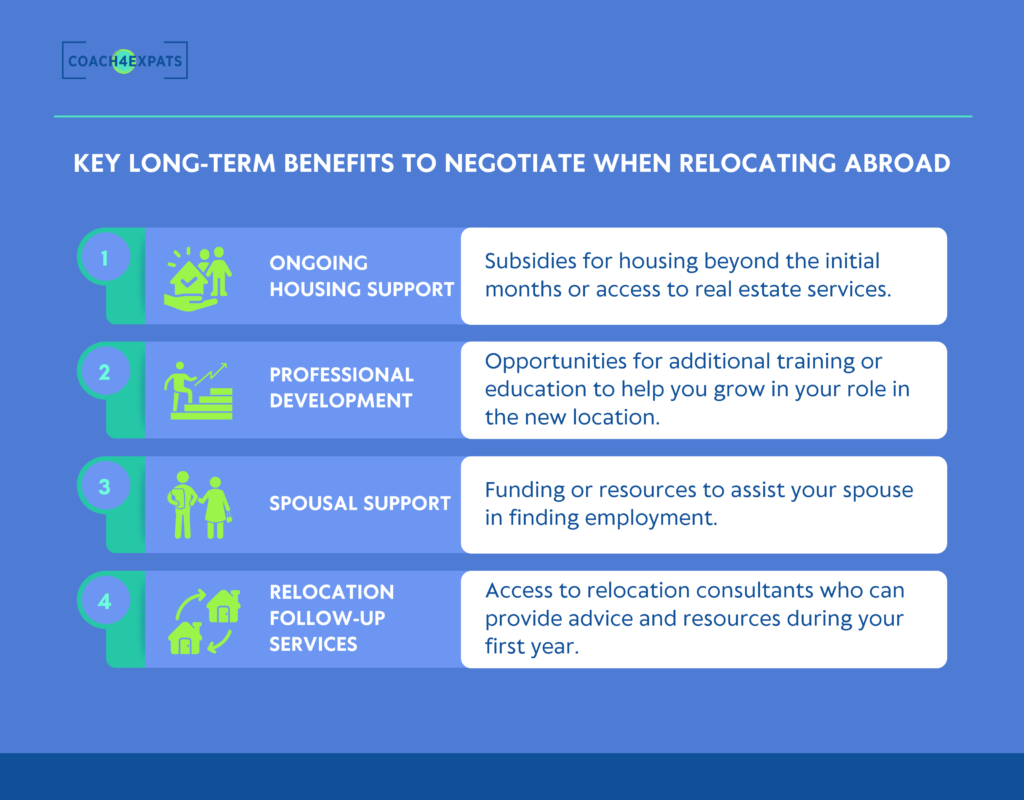
Negotiating for long-term support demonstrates your commitment to succeeding in your new role and environment. By securing these additional benefits, you not only ease the challenges of relocation but also build a foundation for personal and professional success.
Tip 4: Factor in Career Development and Future Opportunities
Relocation offers opportunities to access industries, roles, or regions better aligned with your ambitions. It can broaden your horizons by exposing you to new networks and industries, enhancing your skill set, and positioning you in competitive job markets.
Before accepting an offer, evaluate how it supports your desired career trajectory, such as leadership opportunities or skill enhancement.
Additionally, request support for career development, such as funding for training, certifications, or conferences. These resources can increase your qualifications and expand your professional network, paving the way for future promotions. For example, ask for mentorship programs or leadership training as part of the package.
Finally, prioritize what’s essential for your development. For example, relocating for a role in a niche industry might justify asking for niche-specific training or a dedicated mentorship arrangement. Clarify how such investments benefit both you and the company in the long term.
Tip 5: Get it in Writing
Getting the terms of your relocation package in writing is a critical step in ensuring clarity, avoiding misunderstandings, and protecting yourself legally. Here’s why this is important and what to focus on:
Importance of Written Agreements
Clarity and Transparency: A written agreement explicitly outlines the benefits and responsibilities of both the employee and the employer. It prevents misinterpretations or disputes over verbal promises that might be forgotten or miscommunicated later.
Legal and Financial Security: If disagreements arise, a signed document provides a clear reference to resolve conflicts. It ensures that any promised financial support, such as reimbursements or lump-sum payments, is enforceable.
Accountability: Both parties are held accountable to the terms outlined. Employers are obligated to fulfill the agreed benefits, and employees are bound by any responsibilities stated, such as repayment terms for unused funds
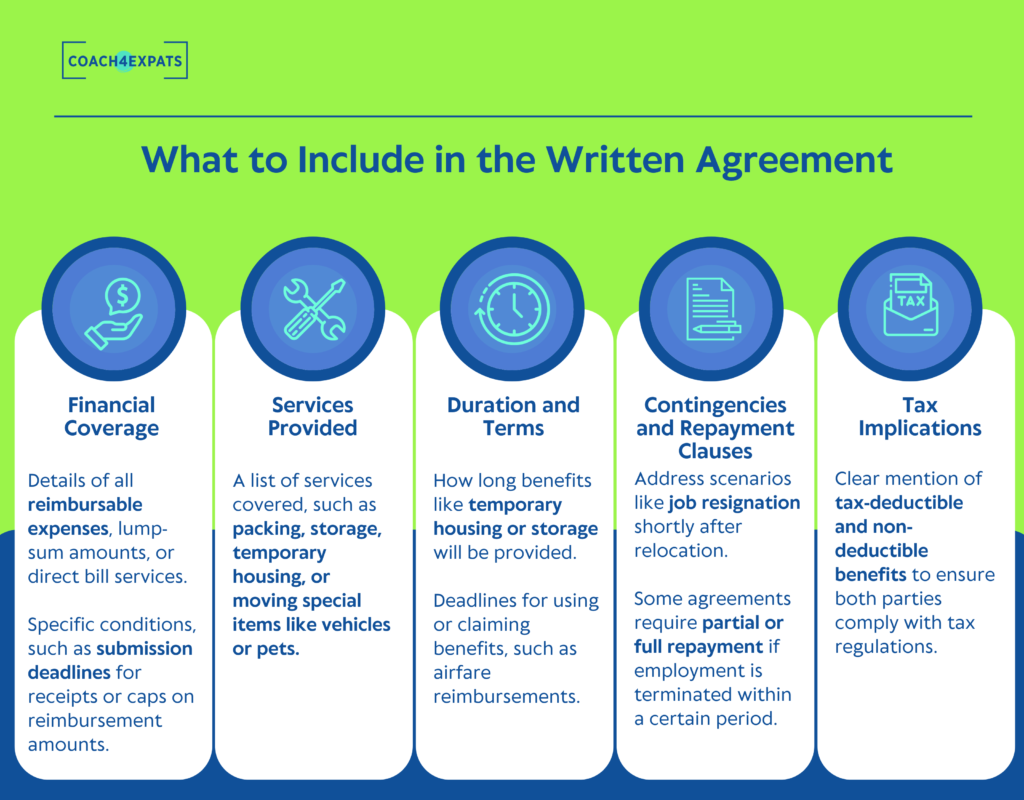
To secure a comprehensive relocation agreement, it’s essential to start by requesting a detailed written breakdown of the relocation package and thoroughly reviewing it to ensure clarity and completeness. Consulting a legal or financial advisor can help verify that the terms are fair and address any potential tax or legal complexities. If key components—such as temporary housing or specific reimbursements—are missing, negotiate their inclusion by clearly justifying how they align with your relocation needs.
At Coach4expats, we offer specialized advisory services in Employment Contract Negotiation and Labor Disputes to support you in achieving the best possible relocation package. With over 15 years of experience in Human Resources and International Labor Law, we provide expert guidance to navigate employment contracts, optimize labor conditions, and effectively manage workplace conflicts.
Take Control of Your Move: Join Coach4Expats for Expert Guidance and Community Support

Take a look at our
job search services👇
Coach4expats understands the unique challenges of finding work opportunities abroad and we are here to make the process smoother and more successful for you. Our comprehensive suite of services is designed to guide you through every step of your job search and relocation, including:
Whether you’re seeking personalized advice, access to industry insights, or a supportive network, Coach4expats is here to ensure your relocation experience is a stepping stone to your brightest future.
Contact us and start your journey with us today!